How to Pack Dishes for Moving Without Opening a Box of Broken Glass
Dishes need a different packing approach from clothes, books, or other everyday household belongings. Plates can crack from pressure, glasses can collide inside a partially filled box, and one poorly packed heavy piece can damage several lighter items around it. If your move includes a period between addresses, comparing storage options across the country before packing can help you decide which kitchen boxes are going directly to the new home and which need to remain packed longer. Either way, the same principle applies: keep fragile pieces separated and stop them from shifting inside the box.
Start with the right packing materials
Before emptying the cabinets, gather sturdy boxes, packing paper or another suitable cushioning material, packing tape, and a marker. Cardboard cell dividers are useful for glasses because they keep individual pieces separated. Specialty dish boxes are another option. U-Haul, for example, sells double-wall dish boxes and divider systems specifically intended for fragile dinnerware and glassware. You don't need a branded kit to pack dishes successfully, but the underlying idea is useful: strong outer walls, cushioning, and separation between fragile pieces. Avoid relying on a large box simply because it holds more. Dishes become heavy quickly, so a manageable box with a solid bottom is easier to carry and less likely to fail under the load.
Reinforce and cushion the box
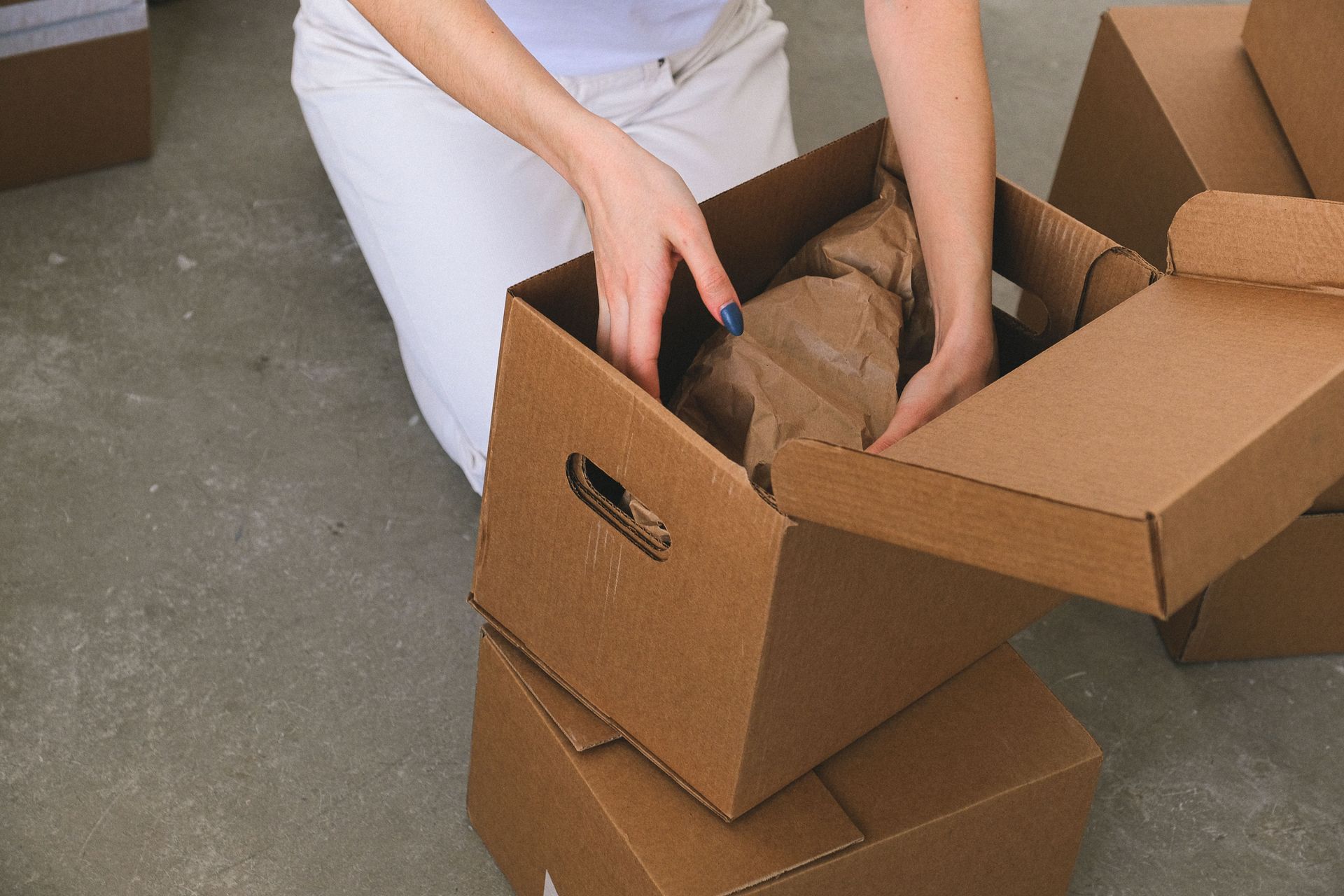
Tape the bottom seams securely before adding anything. Fragile contents are only as protected as the box holding them.
Add cushioning across the bottom so dishes aren't resting directly against bare cardboard. The layer should be even enough that the first row of dishes has a padded base rather than a few loose pieces of paper underneath it. As you pack, fill empty spaces around the contents. A box with large gaps gives dishes room to move when it is carried, loaded, or transported.
Wrap dishes individually
Separate fragile pieces instead of depending on the box to protect an entire stack. Wrap plates, bowls, mugs, and glasses individually with packing paper or another protective material appropriate for fragile household goods. Pay attention to handles, stems, rims, and other vulnerable areas. A mug handle shouldn't be pressed directly against another mug, and glass rims shouldn't knock together.
If you're packing several boxes from the kitchen, our broader packing tips for moving can help with organizing the rest of the room once the fragile pieces are protected.
Pack plates in rows rather than flat stacks
One useful packing method is to position protected plates in rows instead of building a tall horizontal stack. Keep each plate wrapped and add cushioning where needed so the pieces don't rub against one another. Avoid forcing an extra plate into a row that is already tight. The goal is a snug arrangement, not compression. If closing the box requires pushing down on the contents, move a few pieces to another box.
Give glasses their own compartments
Glasses and stemware benefit from separation. Cardboard cell dividers create individual compartments so pieces don't repeatedly strike each other while the box is moving. Wrap each glass before placing it into its compartment. Delicate stemware deserves particular care around the bowl, stem, and base rather than a loose sheet of paper dropped over the top. U-Haul's dish and glass packing guidance demonstrates the same separation principle with individual foam pouches and cardboard dividers.
Pack bowls without creating pressure points
Bowls are easier to nest than plates, but nesting doesn't mean they should touch directly. Put protective material between pieces and avoid building a stack so heavy that the bottom bowl carries excessive weight. Very delicate bowls are better treated as individual fragile pieces rather than nested tightly. Use the shape of the item to decide how much separation it needs. Keep heavier pieces lower in the box and lighter, more delicate dishes above them. Don't put a heavy casserole dish on top of thin glassware simply because there is open space.
Protect mugs and handled pieces
Mug handles are obvious weak points. Wrap the entire mug and make sure the handle has enough cushioning that it isn't bearing pressure from the piece beside it. Don't fill the inside of a mug with a heavy object to save space. Lightweight packing material inside the cup is fine for support, but the mug itself shouldn't become a container for dense items. The same principle applies to pitchers, teapots, and other pieces with projecting handles or spouts. Give the fragile section space rather than wedging it tightly against another object.
Keep the box snug without overpacking it
Once the dishes are in place, check for open areas. Fill gaps with packing material so the contents don't slide when the box changes direction. You can test the box gently before sealing it. If you can hear or feel pieces shifting, add cushioning rather than assuming the next box or surrounding furniture will hold everything still. Finish with another cushioning layer at the top. The flaps should close naturally without pressing down on the dishes.
Label fragile boxes clearly
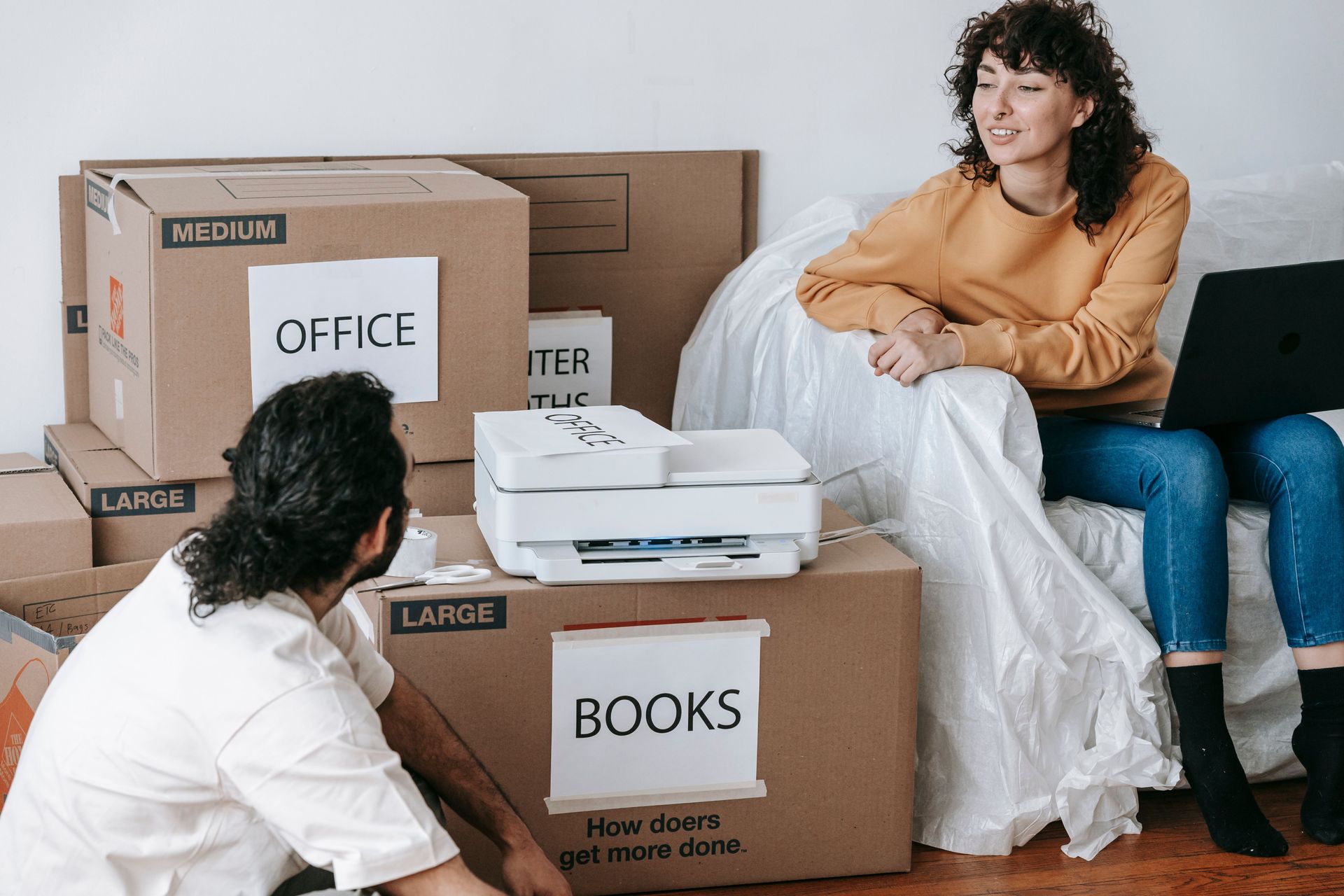
Write “fragile” and “kitchen” where the labels will remain visible after boxes are stacked. Adding a more specific note such as “plates” or “glassware” makes unpacking easier. Keep dish boxes upright. Don't treat a fragile label as a substitute for thoughtful loading, since a clearly marked box can still be damaged if a much heavier container is placed on top. If boxes will spend time in a storage unit, position fragile dishware where it won't have to be moved repeatedly to reach other belongings.
Pack a small set of dishes separately
Don't seal every plate, cup, and utensil if you'll still be in the old home for several days. Keep enough basic kitchenware available for the period immediately before the move. The same idea helps at the destination. A clearly marked essentials box saves you from opening every kitchen carton on the first evening just to find a cup and plate.
Loading dish boxes for the move
Dish boxes belong on a stable surface in the moving vehicle. Keep them upright and avoid putting heavy furniture, appliances, or dense boxes on top. Watch for spaces where a box could tip or slide. Good packing inside the carton matters, but controlling movement around the carton matters too. If you're using professional movers, point out the fragile boxes rather than assuming every label will be noticed during loading.
If dishes are going into storage
Boxes of dishes should be dry before they're sealed, and the outside of the boxes should remain in good condition. Keep them off unstable stacks and avoid putting them beneath containers that are significantly heavier. Students and families around Chestertown who are packing belongings for a temporary transition may also find our Washington College student storage guide useful for planning what should be packed away and what should remain accessible. Our Chestertown-area location is Kingstown Storage at 6430 Church Hill Road. Because features and available unit types vary by property, check the current location information before choosing a space based on a particular amenity.
Pack for the trip, not only for the box
Protecting dishes comes down to controlling contact and movement. Use a sturdy container, cushion the bottom, separate fragile pieces, fill space, and avoid placing heavy items above delicate ones. Those choices matter every time the box is lifted, carried, loaded, and unloaded. If your kitchen boxes need somewhere to stay between move-out and move-in, you can
explore
storage options from Partners Self Storage and compare the locations and available spaces before deciding where they should go.